 Product
 Industrial Use
 Furniture & medical Use
 Emergency lighting
 Robotics field
 Technical Support
 About us
 Culture
 Milestone
 Responsibility
 Contact Us
 News and Events
 Global agents
 Certificate
 GeMinG
 English
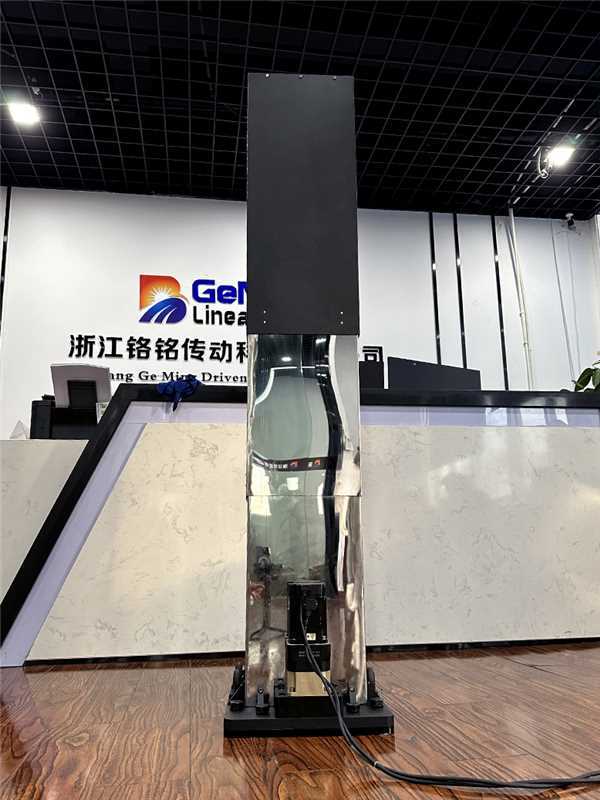
This paper studies the lifting performance of the HTG3 industrial robot under heavy load (100kg) conditions, focusing on its motion stability, speed control strategy, and structural optimization scheme under an eccentricity of 3.5 meters. Experimental verification shows that the robot can achieve high-precision positioning in the speed range of 100-300mm/s, providing a reliable solution for heavy material handling.

Keywords: Industrial robot; heavy load; lifting control; eccentricity; motion stability
With the transformation of manufacturing towards intelligent manufacturing, the demand for industrial robots in heavy material handling is increasing. The HTG3, a six-axis industrial robot designed specifically for heavy loads, has a maximum gripping capacity of 100kg and a working radius covering an eccentricity of 3.5 meters, showing broad application prospects in automotive manufacturing, aerospace, and other fields. This paper explores its dynamic characteristics and optimization methods in lifting operations through theoretical analysis and experimental verification.
2. HTG3 Robot Structural Characteristics
2.1 Mechanical Structure Design
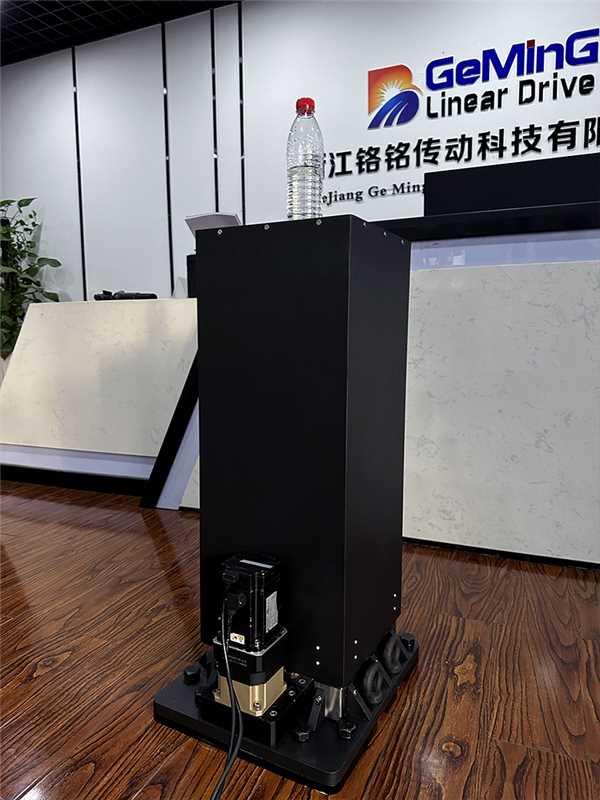
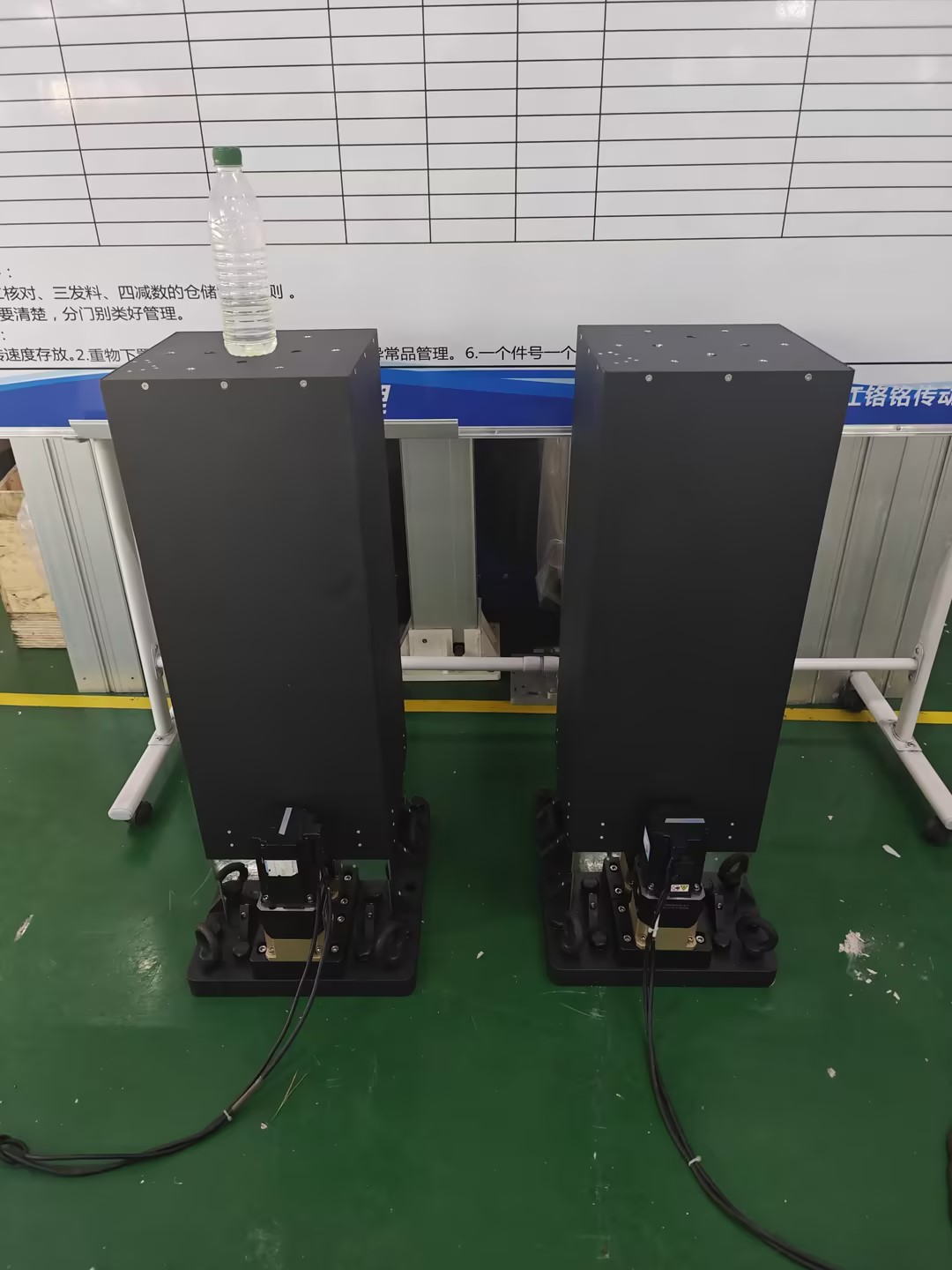
The HTG3 adopts a vertical serial six-axis structure, consisting of a base, waist joint, lower arm, elbow joint, upper arm, and wrist joint. Its core innovations are:
Heavy-duty joint design: Utilizing a high-torque servo motor (rated output torque ≥300 N·m) paired with an RV reducer, the transmission efficiency reaches over 92%, ensuring stable power output under heavy-load conditions.
Eccentricity compensation mechanism: Integrating the T-axis drive motor into the upper arm cavity via a synchronous belt drive system reduces the mass of the end flange and improves motion accuracy at an eccentricity of 3.5 meters.
Protection level: IP67 protection design, suitable for harsh industrial environments such as dust and oil contamination.
2.2 Kinematic Parameters
Parameter Value
Maximum Load 100kg
Working Radius 3.5m
Lifting Speed Range 100-300mm/s
Repeat Positioning Accuracy ±0.1mm
3. Heavy Load Lifting Control Strategy
3.1 Speed-Load Coupling Model
Under heavy load conditions, the robot's motion characteristics exhibit nonlinear features. By establishing a dynamic model, it was found that:
Acceleration Influence: When the acceleration exceeds 0.5m/s², the end effector jitter amplitude increases by 35%, requiring a vibration suppression algorithm to control the full-load jitter to <0.3mm.
Speed Optimization: In the 100-300mm/s range, using an S-shaped acceleration/deceleration curve can reduce start-stop impact and improve positioning accuracy.
3.2 Eccentricity Compensation Algorithm
To address the torque fluctuation caused by a 3.5m eccentricity, a compensation strategy based on feedforward control is designed:
Real-time Torque Calculation: The required torque for each axis is dynamically calculated based on data feedback from the joint encoder.
Gravity Compensation: A coordinate system is established using the D-H parameter method to eliminate the influence of gravity on the end trajectory.
Experimental Verification: Under conditions of an eccentricity of 3.5 meters and a load of 100 kg, the trajectory tracking error is reduced to ±0.5 mm.
4. Experimental Verification
4.1 Experimental Setup
Equipment: HTG3 industrial robot, 100 kg standard weight, laser tracker.
Working Conditions: Eccentricity 3.5 meters, speeds set at 100 mm/s, 200 mm/s, and 300 mm/s respectively.
Indicators: Positioning accuracy, repeatability, operational stability.
4.2 Results Analysis
Speed (mm/s) Positioning Accuracy (mm) Repeatability (mm) Vibration Amplitude (mm)
100 ±0.08 ±0.05 0.12
200 ±0.15 ±0.10 0.25
300 ±0.22 ±0.15 0.35
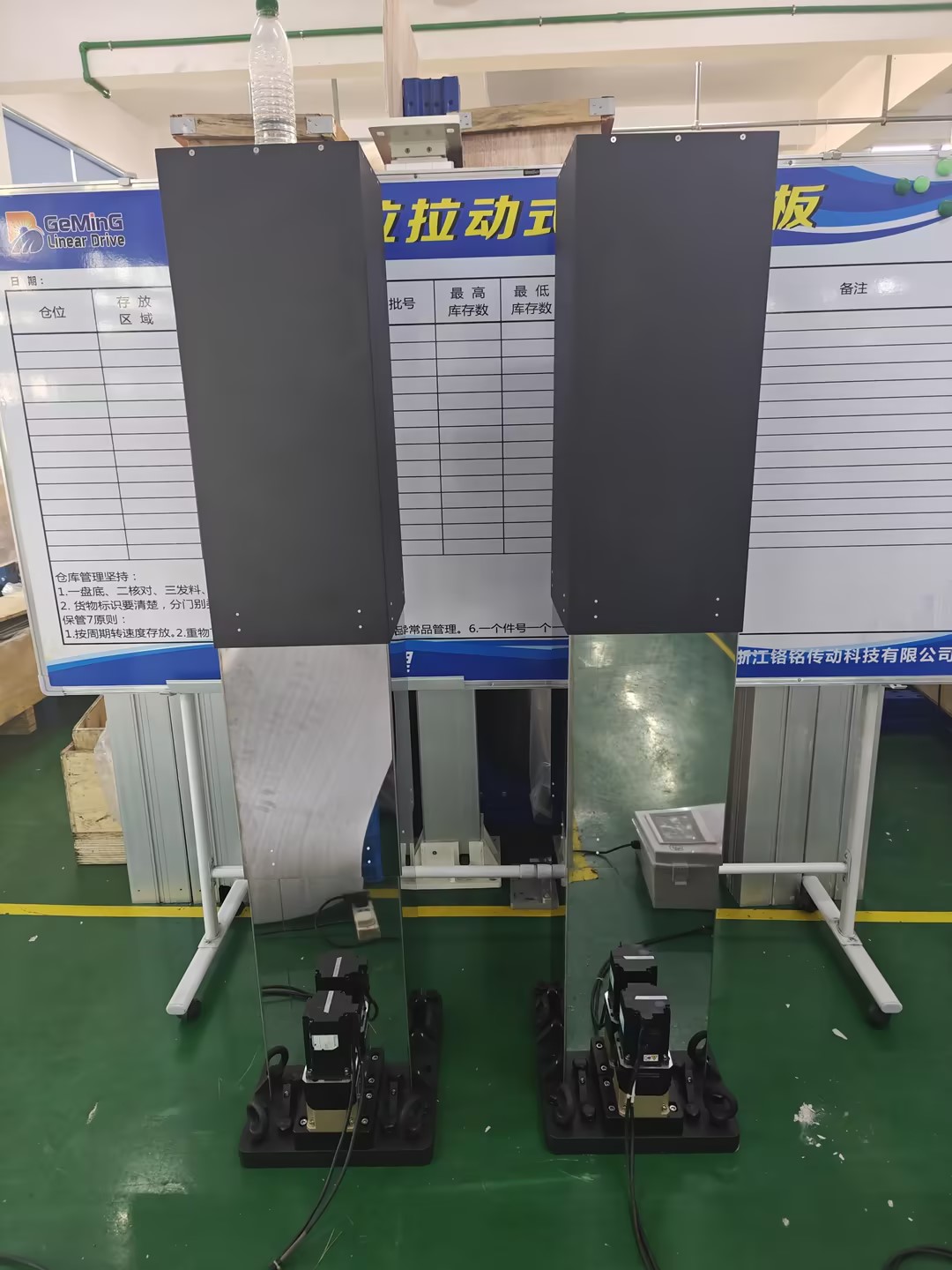
Experiments show that the robot's overall performance is optimal at a speed of 200 mm/s, meeting the requirements for heavy-duty material handling.
5. Application Cases
5.1 Material Handling on an Automobile Production Line
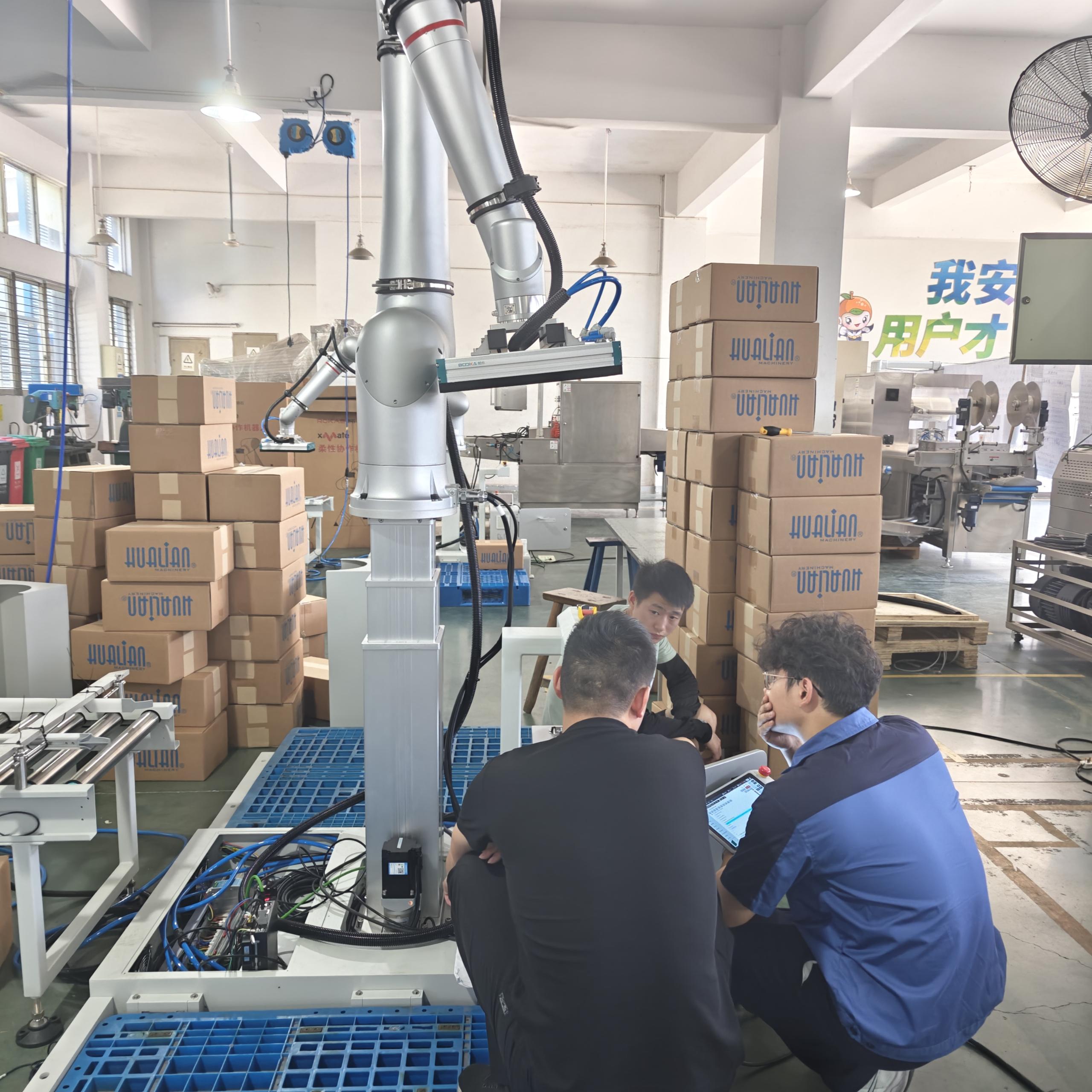
An automobile manufacturing plant uses an HTG3 robot for engine block handling, achieving the following improvements:
Efficiency Improvement: Cycle time increased from 8 times/minute to 12 times/minute.
Quality Improvement: Workpiece collision rate reduced by 70%.
Cost Savings: Annual maintenance costs reduced by 150,000 yuan.
5.2 Aerospace Component Assembly
In aircraft fuselage docking operations, the HTG3 achieves wide coverage with a 3.5-meter eccentricity, achieving an assembly accuracy of ±0.2mm, meeting aerospace-grade standards.
Under heavy load (100kg) and large eccentricity (3.5m) conditions, the HTG3 industrial robot, through structural optimization and intelligent control strategies, achieves high-precision lifting operations within a speed range of 100-300mm/s. Future research could focus on:

 NEWS
NEWS